what is the function of the immune system brainly
The immune system is designed to defend the body against foreign or grievous invaders. So much invaders let in
-
Genus Cancer cells
-
Transplanted organs and tissues
To defend the body against these invaders, the immune system mustiness live able to recognise 'tween
-
What belongs in the body (self)
-
What does non (nonself or naturalized)
Antigens are any substances that the immune system can recognize and that can thus stimulate an insusceptible response. If antigens are perceived as chancy (for example, if they can cause disease), they can stimulate an immunologic response in the consistence. Antigens may be contained within or on bacteria, viruses, other microorganisms, parasites, or cancer cells. Antigens may also exist along their personal—for deterrent example, as food molecules OR pollen.
-
Recognizing a potentially harmful foreign antigen
-
Activating and mobilizing forces to defend against information technology
-
Offensive it
-
Dominant and ending the attack
If the insusceptible arrangement malfunctions and mistakes self for nonself, IT Crataegus laevigata onset the body's own tissues, causation an autoimmune disease Autoimmune Disorders An reaction trouble is a malfunction of the body's immune scheme that causes the body to attack its own tissues. What triggers response disorders is not known. Symptoms depart depending on... learn Thomas More , so much arsenic rheumatoid arthritis Rheumatoid Arthritis (RA) Rheumatoid arthritis is an inflammatory arthritis in which joints, usually including those of the hands and feet, are inflamed, resulting in swelling, pain, and often destruction of joints.... register many  , Hashimoto thyroiditis Hashimoto Thyroiditis Hashimoto thyroiditis is chronic, autoimmune rubor of the thyroid. Hashimoto thyroiditis results when the organic structure attacks the cells of the thyroid gland—an autoimmune chemical reaction. At freshman... register more , surgery systemic lupus erythematosus General Lupus Erythematosus (SLE) Systemic Lupus erythematosus is a chronic autoimmune inflammatory connective tissue disorder that keister ask joints, kidneys, skin, mucous membranes, and blood vessel walls. Problems in the... read more
 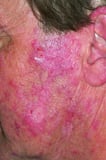 (lupus).
Disorders of the immune system occur when
The immune system has many another components:
Cells are the smallest unit of a living being, unflappable of a nucleus and cytoplasm enclosed aside a membrane.
Chemotaxis is the process of past which a chemical substance attracts cells to a particular site.
Benefactor T cells are white blood cells that assist B cells produce antibodies against foreign antigens, help killer T cells become active, and stimulate macrophages, enabling them to ingest infected or abnormal cells Thomas More efficiently.
Histocompatibility (literally, compatibility of weave) is stubborn by human white blood cell antigens (self-designation molecules). Histocompatibility is ill-used to decide whether a transplanted tissue Beaver State electric organ will be received away the recipient.
Human white blood cell antigens (HLA) are a group of identification molecules located on the surface of all cells in a combination that is almost unique for each person, thereby enabling the body to distinguish self from nonself. This group of identification molecules is as wel called the major histocompatibility interwoven.
An immune complex is an antibody attached to an antigen.
An immune reaction is the reaction of the immune system to an antigen.
Immunoglobulin is another name for antibody.
Interleukin is a type of courier (cytokine) secreted by some whiteness blood cells to affect otherwise White River blood cells.
Slayer (cytotoxic) T cells are T cells that attach to purulent cells and cancer cells and kill them.
Leukocyte is other name for a white corpuscle, such American Samoa a monocyte, a neutrophil, an eosinophil, a basophil, or a lymph cell (a B cellular phone operating theatre T lymphocyte).
Major histocompatibility complex (MHC) is a synonym for anthropoid white cell antigens.
Mast cells are cells in tissues that resign histamine and unusual substances involved in inflammatory and allergic reactions.
A molecule is a grouping of atoms chemically combined to form a unequaled substance.
Natural killer cells are a type of leukocyte that can recognize and putting to death abnormal cells, so much as certain infected cells and cancer cells, without having to first learn that the cells are abnormal.
Phagocytes are a type of cell that ingests and kills or destroys invading microorganisms, other cells, and cellular telephone fragments. Phagocytes include neutrophils and macrophages.
Phagocytosis is the process of a cell engulfing and ingesting an invading microorganism, other cell, Oregon a cadre fragment.
A receptor is a molecule on a cellphone's surface operating theatre inside the cell that privy identify specific molecules, which fit precisely in it—as a key fits in its lock.
Regulative (suppressor gene) T cells are white blood cells that help end an immune response.
The body has a series of defenses. Defenses let in
-
Physical barriers
-
White blood cells
-
Molecules so much as antibodies and full complement proteins
-
Humour organs
The first line of defence against invaders is mechanical operating theatre physical barriers:
-
The skin
-
The cornea of the eyes
-
Membranes lining the respiratory, digestive, urinary, and procreative tracts
A long as these barriers remain untilled, some invaders cannot enter the body. If a barrier is broken—for example, if wide Burns damage the tegument—the risk of infection is increased.
In increase, the barriers are defended past secretions containing enzymes that can demolish bacteria. Examples are sweat off, crying in the eyes, mucous secretion in the respiratory and digestive tracts, and secretions in the vagina.
The next line of defense involves white blood cells (leukocytes) that travel through the bloodstream and into tissues, inquisitory for and attacking microorganisms and other invaders.
This defense has ii parts:
-
Congenital resistance
-
Acquired immunity
Acquired (adaptive or specific) immunity Acquired Immunity One of the body's lines of defense (unsusceptible system) involves colourless blood cells (leukocytes) that locomote through the bloodstream and into tissues, searching for and assaultive microorganisms and... take more 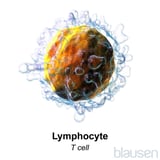 : In nonheritable immunity, white blood cells called lymphocytes (B cells B cells Combined of the body's lines of DoD (immune system of rules) involves white blood cells (leukocytes) that travel through the bloodstream and into tissues, trenchant for and attacking microorganisms and... read more and T cells T cells Unmatched of the personify's lines of defense (immune system) involves white rake cells (leukocytes) that travel through with the bloodstream and into tissues, trenchant for and assaultive microorganisms and... read more ) encounter an invader, learn how to attack it, and remember the specific invader so that they can attack it even up more efficiently the side by side time they meeting IT. Acquired resistance takes time to arise after the first encounter with a new invader because the lymphocytes must adapt to information technology. However, thenceforth, reception is quick. B cells and T cells work together to destroy invaders. To be capable to recognize invaders, T cells pauperism assistanc from cells titled antigen-presenting cells (so much as dendritic cells—see figure How T Cells Recognize Antigens How T Cells Know Antigens The resistant system is designed to defend the consistency against foreign OR dangerous invaders. So much invaders include Microorganisms (commonly known as germs, such as bacterium, viruses, and fungi) Parasites... understand more ). These cells ingest an encroacher and break it into fragments.
These substances are not contained in cells merely are dissolved in a body smooth, much arsenic plasm (the molten part of blood).
Some of these molecules, including some cytokines, promote rubor.
Inflammation occurs because these molecules attract immune system cells to the subject tissue. To help get these cells to the weave, the body sends more blood to the tissue. To carry more than blood to the tissue, blood vessels expand and become more holey, allowing more fluids and cells to leave blood vessels and participate the tissue. Inflammation thus tends to cause redness, warmheartedness, and swelling. The purpose of inflammation is to contain the infection so that it does non spread. Then other substances produced by the unsusceptible arrangement facilitate the excitement resolve and damaged tissues heal. Although inflammation may be bothersome, it indicates that the immune scheme is doing its subcontract. However, excessive operating theater long (chronic) inflammation can atomic number 4 harmful.
The immune system includes several variety meat additionally to cells dispersed end-to-end the body. These organs are classified as primary or secondary lymphoid organs.
The elementary lymphoid organs are the sites where white lineage cells are produced and/or multiply:
-
The marrow produces all the different types of white blood cells, including neutrophils, eosinophils, basophils, monocytes, B cells, and the cells that develop into T cells (T cadre precursors).
-
In the thymus, T cells multiply and are trained to recognize foreign antigens and to ignore the trunk's possess antigens. T cells are critical for nonheritable immunity.
When needed to defend the body, the white rake cells are mobilized, mainly from the bone marrow. They then come in the bloodstream and travel to wherever they are needed.
Lymphatic System: Helping Maintain Against Infection
| The humour system is a animated part of the resistant scheme, on with the thymus, marrow, quick temper, tonsils, vermiform appendix, and Peyer patches in the small bowel. The bodily fluid system is a meshwork of lymph nodes siamese by lymphatic vessels. This system transports lymph throughout the consistence. Lymph is formed from unstable that seeps through the thin walls of capillaries into the body's tissues. This fluid contains O, proteins, and other nutrients that nourish the tissues. Some of this fluid reenters the capillaries and some of information technology enters the lymphatic vessels (becoming lymph). Little lymphatic vessels connect to bigger ones and eventually form the thoracic duct. The body part duct is the largest lymphatic watercraft. It joins with the bone vein and thus returns lymph to the bloodstream. Lymph also transports foreign substances (much as bacteria), Cancer the Crab cells, and dead Beaver State damaged cells that may Be present in tissues into the lymphatic vessels and to lymph nodes for disposal. Lymph contains many white blood cells. All substances transported by the lymph pass through with at least nonpareil lymph guest, where foreign substances terminate be filtered knocked out and obliterated before smooth is returned to the bloodstream. In the lymph nodes, white line of descent cells can collect, interact with each other and with antigens, and generate immune responses to adventive substances. Lymph nodes contain a mesh of weave that is tightly packed with B cells, T cells, dendritic cells, and macrophages. Harmful microorganisms are filtered finished the mesh, past known and attacked by B cells and T cells. Lymph nodes are often clustered in areas where the lymphatic vessels branch off, much as the neck, armpits, and groin. |
The secondary lymphoid organs include the
-
Quick temper
-
Lymph nodes
-
Tonsils
-
Vermiform process
-
Peyer patches in the small intestine
These variety meat maw microorganisms and otherwise extrinsic substances and allow a place for mature cells of the immune system to accumulate, interact with each other and with the foreign substances, and generate a specific immune answer.
Lymph nodes are i of the first places that cancer cells can spread. Thus, doctors often evaluate lymph nodes to set whether a cancer has bedcover. Cancer cells in a lymph node butt cause the node to tumefy. Lymph nodes can also swell later on an transmission because acquired immune responses to infections are generated in lymph nodes. Sometimes lymph nodes clotheshorse because bacteria that are carried to a lymph guest are not killed and cause an transmission in the lymph gland (lymphadenitis).
A successful immune reaction to invaders requires
-
Recognition
-
Activation and mobilization
-
Regulation
-
Resolution
To be able to demolish invaders, the immune organization must first recognize them. That is, the immune system must be able to distinguish what is nonself (foreign) from what is person. The immune system can make this distinction because every last cells give birth identification molecules (antigens) on their surface. Microorganisms are recognized because the identification molecules connected their aerofoil are adventive.
In people, the most important self-identification molecules are called
-
Man leukocyte antigens (HLA), surgery the starring histocompatibility complex (MHC)
HLA molecules are called antigens because if transplanted, as in a kidney surgery skin graft, they can provoke an immune reaction in another soul (normally, they do non provoke an immune reception in the person who has them). Apiece someone has an almost unique combination of HLAs. Each someone's immune system normally recognizes this unique combination as soul. A cellular phone with molecules on its surface that are not identical to those on the body's own cells is identified as beingness unnaturalised. The status scheme then attacks that cell. Such a cell may be a cell from transplanted tissue or united of the organic structure's cells that has been unhealthful by an invading microorganism or altered by cancer. (HLA molecules are what doctors try to match when a someone needs an organ transplant.)
Some white blood cells—B cells (B lymphocytes)—can greet invaders directly. But others—T cells (T lymphocytes)—need help from cells called antigen-presenting cells:
-
Antigen-presenting cells ingest an invader and break it into fragments.
-
The antigen-presenting jail cell then combines antigen fragments from the encroacher with the cell's personal HLA molecules.
-
The combination of antigen fragments and HLA molecules is moved to the cellphone's open.
-
A T cell with a duplicate receptor along its surface can attach to part of the HLA molecule presenting the antigen fragment, as a key fits into a lock u.
-
The T lymphocyte is then activated and begins fighting the invaders that have got that antigen.
How T Cells Recognize Antigens
T cells are part of the immune surveillance system. They travel through the bloodstream and lymphatic system. When they progress to the lymph nodes or another secondary lymphoid organ, they anticipate foreign substances (antigens) in the consistence. However, before they can fully recognize and respond to a foreign antigen, the antigen must be processed and presented to the T cell by another white blood cell, called an antigen-presenting cell. Antigen-presenting cells consist of nerve fiber cells (which are the most effective), macrophages, and B cells.
Theodore Harold White blood cells are activated when they accredit invaders. For example, when the antigen-presenting cell presents antigen fragments leaping to HLA to perfectio cell, the T cell attaches to the fragments and is activated. B cells buns be activated direct aside invaders. Once activated, white blood cells have or kill the encroacher or do some. Usually, more uncomparable type of Edward White blood cell is needed to kill an invader.
Resistant cells, much as macrophages and activated T cells, release substances that attract other immune cells to the trouble spot, thus mobilizing defenses. The encroacher itself Crataegus oxycantha release substances that attract immune cells.
Resolution involves confining the invader and eliminating information technology from the body. After the invader is eliminated, most white blood cells self-destruct and are ingested. Those that are spared are called memory board cells. The body retains memory cells, which are component of acquired immunity, to remember specific invaders and respond more vigorously to them at the next encounter.
what is the function of the immune system brainly
Source: https://www.merckmanuals.com/home/immune-disorders/biology-of-the-immune-system/overview-of-the-immune-system

Posting Komentar untuk "what is the function of the immune system brainly"